
Attention-deficit/hyperactivity disorder (ADHD) is a neurodevelopmental condition that affects millions of individuals across the globe. Its symptoms—ranging from hyperactivity and impulsiveness to difficulties with attention—can severely affect a person’s daily functioning, academic performance, and social relationships. While there are medications for ADHD, it is therapy that is crucial to help manage the disease. Over the years, research has proved how Dialectical Behavior Therapy (DBT) is effective for managing ADHD symptoms. This article explores ADHD and its key symptoms, while examining how DBT principles and strategies can be applied to support individuals living with ADHD.
What is ADHD?
ADHD is characterized by persistent patterns of inattention, hyperactivity, and impulsivity that interfere with functioning or development. ADHD is prevalent in childhood, but continues to adulthood hindering an individual’s ability to concentrate, focus, pay attention, stay organized or complete tasks. There are three common presentations of ADHD being: primarily inattentive, primarily hyperactive-impulsive, and combined. The disorder can disrupt school, work, and personal relationships, creating barriers to success and well-being.
Common Signs and Symptoms of ADHD
ADHD symptoms generally fall into two main categories: inattention and hyperactivity/impulsivity. Common signs include:
- Hyperactivity: Being fidgety or unable to sit still, excessive talking, interrupting people
- Inattention: Poor focus, distracted, forgetfulness, poor organizational skills, and frequent mistakes.
- Impulsivity: Hyperfixation, acting without thinking, interrupting conversations, difficulty waiting, and blurting out answers.
- Disorganization: Trouble managing time, losing items, and failing to meet deadlines.
- Emotional Sensitivity: Easily frustrated, mood swings, and difficulty managing emotions
The severity of ADHD symptoms varies from person to person and, if left untreated, can lead to long-term academic, occupational, and interpersonal difficulties.
How DBT Can Help ADHD
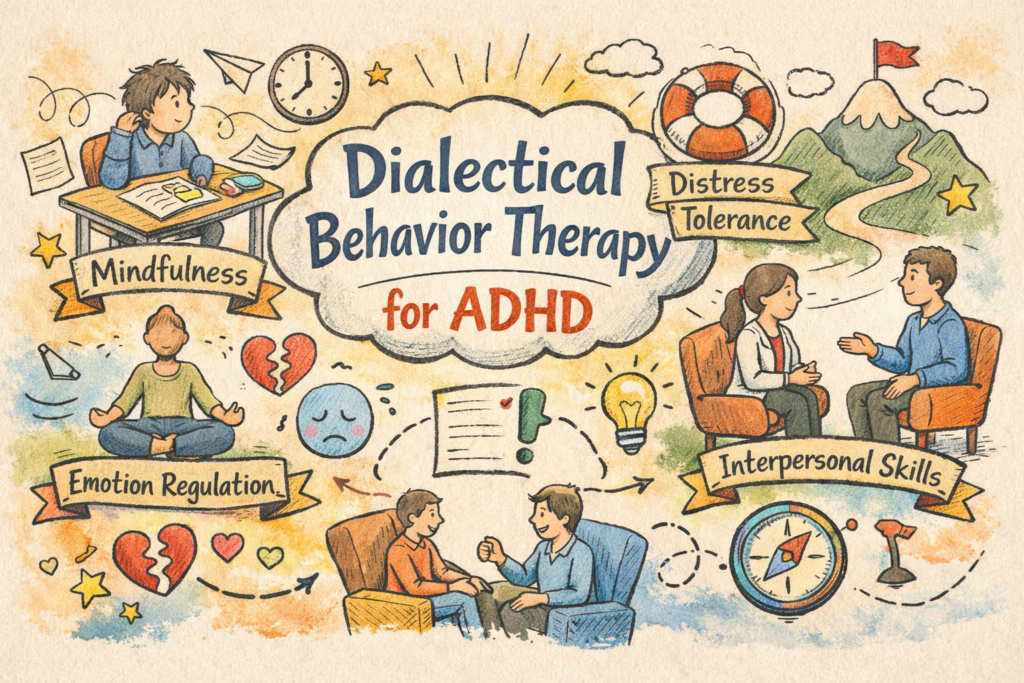
Dialectical Behavior Therapy (DBT), a cognitive-behavioral approach developed by Dr. Marsha Linehan was originally intended for borderline personality disorder (BPD) has over the years proved effective for various mental disorders including ADHD. DBT addresses core ADHD issues like impulsivity, emotional dysregulation, and social difficulties providing a manageable and treatable solution through its various modules. DBT helps regulate emotions, increase mindfulness, and improve interpersonal relationships. DBT’s structured approach includes four core modules: mindfulness, emotion regulation, distress tolerance, and interpersonal effectiveness
DBT also teaches individuals how to cope with frustration, which is often a challenge for people with ADHD when they face obstacles or experience failure. DBT skills focus on developing healthier responses to stress and improving problem-solving abilities.
The Key Element of DBT That Can Help ADHD
One of the key elements of DBT is helping individuals come to terms with their emotional disorder through validation. This is a unique approach focusing on accepting uncomfortable emotions before attempting to change them. This acceptance fosters the possibility of personal growth and transformation. In DBT, therapists help individuals balance acceptance with the drive for change. A key focus is self-control, recognizing patterns, and developing stress management strategies. DBT can be practiced individually but thrives in group settings, where shared experiences and mutual support help individuals like Amanda find effective solutions for their challenges.
Common Difficulties Experienced by Individuals with ADHD that DBT Can Target
People with ADHD often struggle with emotional dysregulation, impulsivity, poor decision-making, and difficulty maintaining attention. DBT can target these issues such as:
- Emotional Dysregulation: Individuals with ADHD often have trouble managing their emotions, resulting in impulsivity, mood swings, and conflicts in relationships. DBT techniques, such as mindfulness and emotion regulation, provide tools for understanding and managing these emotional responses more effectively.
- Impulsivity and Poor Decision-Making: A central feature of ADHD, impulsivity can cause challenges across many areas of life. DBT’s mindfulness and distress tolerance skills teach individuals to pause before reacting impulsively, allowing for more thoughtful decision-making.
- Interpersonal and Social Difficulties: ADHD can impair social skills and relationships. DBT’s interpersonal effectiveness skills help individuals communicate better and navigate social situations more successfully.
These issues can lead to strained relationships, poor academic or work performance, and frustration with daily tasks. DBT is uniquely positioned to help individuals with ADHD improve emotional control, learn distress tolerance skills, and foster more effective interactions with others.
Applying the Four Core DBT Modules to ADHD Treatment
Mindfulness Skills for Improving Focus and Attention in ADHD
Mindfulness helps individuals with ADHD develop awareness of their present moment or live in the moment. This helps reduce being distractibility to enhance the ability to be mindful and aware of themselves, thoughts, and emotions without impulsiveness. For example, mindfulness exercises can help someone notice when their mind starts to wander during a task and gently bring their attention back to the present moment.
Activity: Practicing short mindfulness exercises before starting a task to maintain focus.
Emotion Regulation Strategies for ADHD-Related Sensitivity
Emotional regulation teaches individuals how to identify and manage their overwhelming emotions. ADHD often comes with emotional sensitivity, and DBT skills help manage emotional reactions to stress, frustration, and rejection. For example, individuals can use strategies like checking the facts and reducing vulnerability to negative emotions to maintain balance in emotionally charged situations.
Activity: Using emotion regulation techniques like “opposite action” to act contrary to unhelpful urges, such as taking deep breaths instead of reacting impulsively when frustrated.
Distress Tolerance Skills for Managing Stress and Frustration
Distress tolerance empowers individuals with coping skills in crisis like situations without resorting to impulsive or destructive behavior. Managing stress in ADHD can be challenging, but DBT offers tools like distraction, self-soothing techniques, and radical acceptance to help individuals manage high-stress moments without losing control. An example might be practicing “radical acceptance” when facing a difficult situation at work instead of acting out in frustration.
Activity: Applying self-soothing techniques when feeling overwhelmed during a challenging task, such as listening to calming music or taking a brief walk.
Interpersonal Effectiveness Skills for ADHD and Social Functioning
Interpersonal effectiveness skills teach individuals how to interact with others in a way that maximizes relationships and reduces conflict. Many individuals with ADHD experience social difficulties due to impulsive behaviors or communication challenges. DBT helps improve assertiveness, listening skills, and empathy. For instance, a person with ADHD can use “DEAR MAN,” a DBT strategy, to communicate their needs effectively without overwhelming their conversation partner.
Activity: Using assertiveness training to navigate conflicts with coworkers or family members in a calm and constructive manner.
DBT Activities and Practical Skills for ADHD
In addition to the four core modules, DBT includes specific sub-skills that are particularly helpful for ADHD:
- Chain Analysis: Helps individuals analyze behaviors and emotions and identify triggers, impulsive or maladaptive actions. For ADHD individuals, this can be valuable for identifying patterns in their behavior and learning to intervene before negative consequences occur.
- Opposite Action: Encourages individuals to take actions that oppose their current emotional state, which helps manage impulsive behaviors typical of ADHD.
- ABC PLEASE Skills: This strategy emphasizes building emotional resilience by taking care of physical health, avoiding substances that exacerbate symptoms, and ensuring that personal needs like sleep and nutrition are met.
DEAR MAN Skill for ADHD
DEAR MAN is a structured DBT communication skill designed to help individuals express needs, set boundaries, and navigate interpersonal challenges effectively. Mindfulness an important element in this skill that improves self-awareness in various situations to encourage emotional regulation and effective decision-making
- D – Describe: Clearly describe the situation without judgment
- E – Express: Share feelings and experiences factually
- A – Assert: State needs or requests directly
- R – Reinforce: Highlight positive outcomes of cooperation
- M – Mindful: Stay focused and present
- A – Appear Confident: Use confident body language and tone
- N – Negotiate: Be open to compromise when appropriate
Conclusion
Dialectical Behavior Therapy offers an effective and comprehensive approach for individuals with ADHD who struggle with impulsivity, hyperactivity, and emotional dysregulation. By integrating DBT skills—such as mindfulness, emotion regulation, distress tolerance, and interpersonal effectiveness—individuals can replace unhelpful patterns with balanced, intentional behaviors. As research continues to expand, DBT is emerging as a valuable component of ADHD treatment, offering hope for improved functioning, emotional stability, and overall quality of life.