Free DBT Worksheets and Dialectical Behavior Therapy Resources
Practise mindfulness, distress-tolerance, emotion-regulation and interpersonal-effectiveness skills with printable DBT worksheets.
This collection brings together downloadable Dialectical Behavior Therapy skill worksheets for education, structured practice and use alongside appropriate professional support. Each worksheet focuses on a specific skill; it does not diagnose a condition or replace a comprehensive DBT programme.
Jump to: Mindfulness · Distress Tolerance · Emotion Regulation · Interpersonal Effectiveness
What Are Dialectical Behavior Therapy Worksheets?
Dialectical Behavior Therapy (DBT) worksheets are practical exercises designed to reinforce the skills taught in DBT. These downloadable PDF worksheets cover four main areas
- Mindfulness
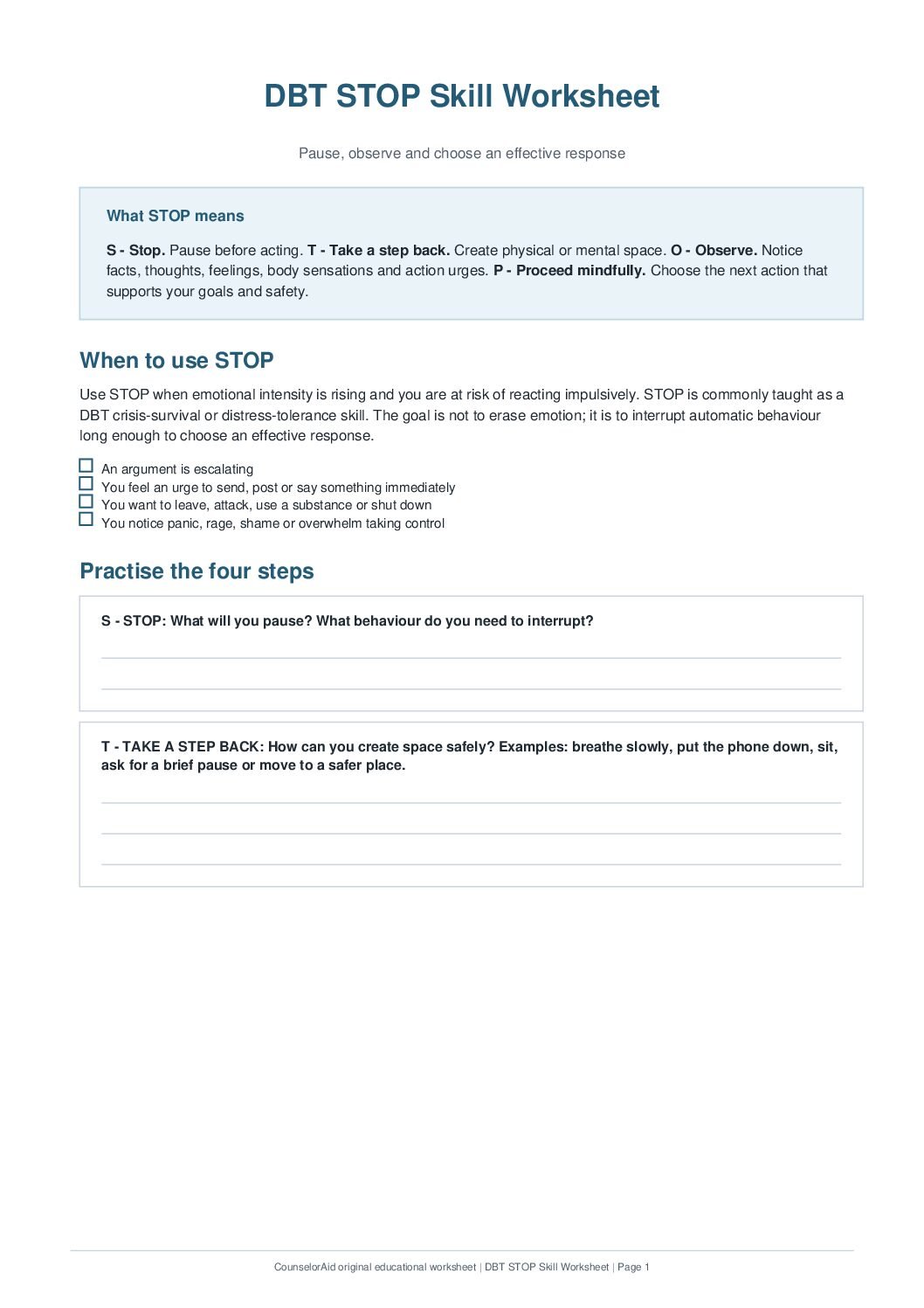
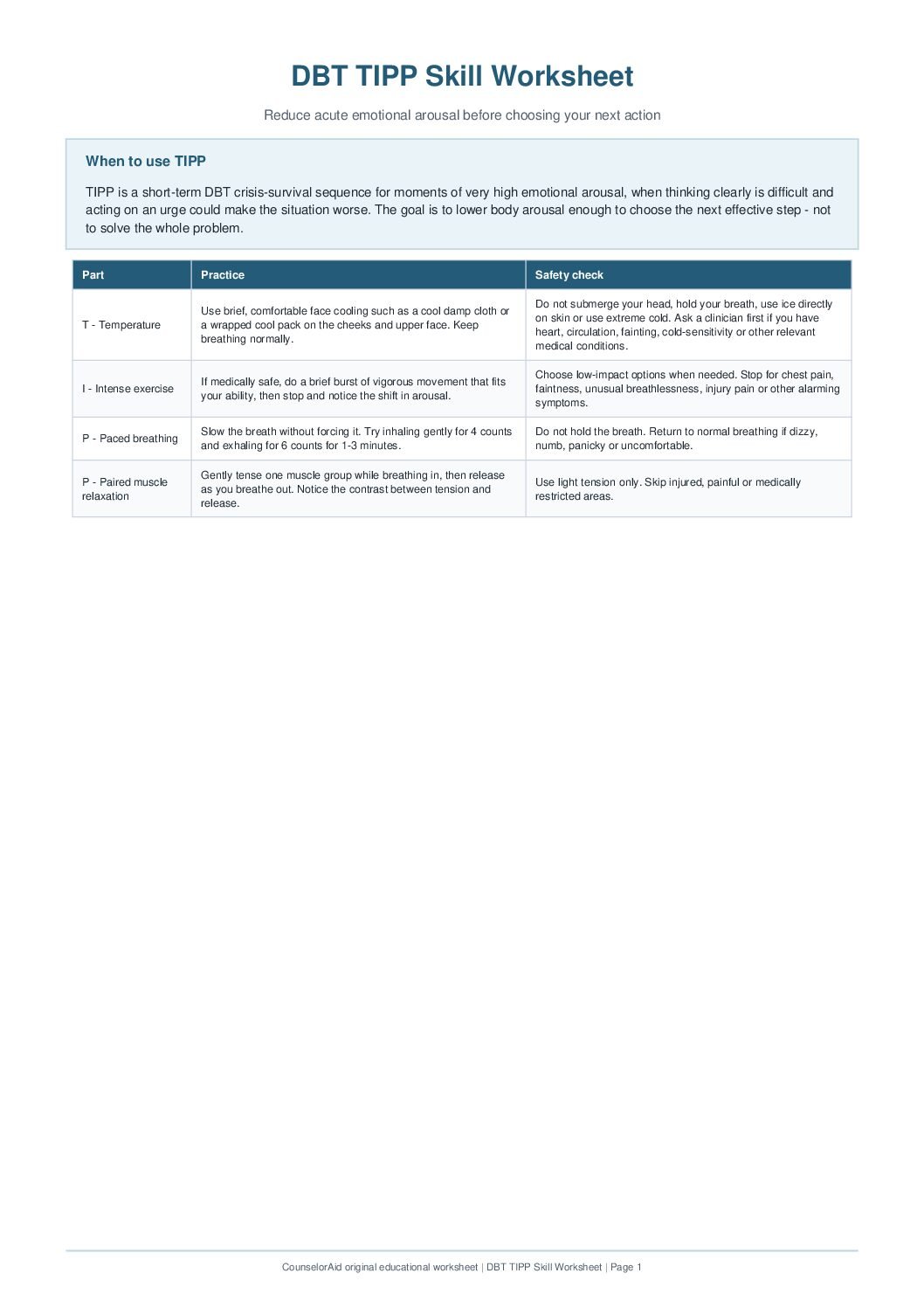
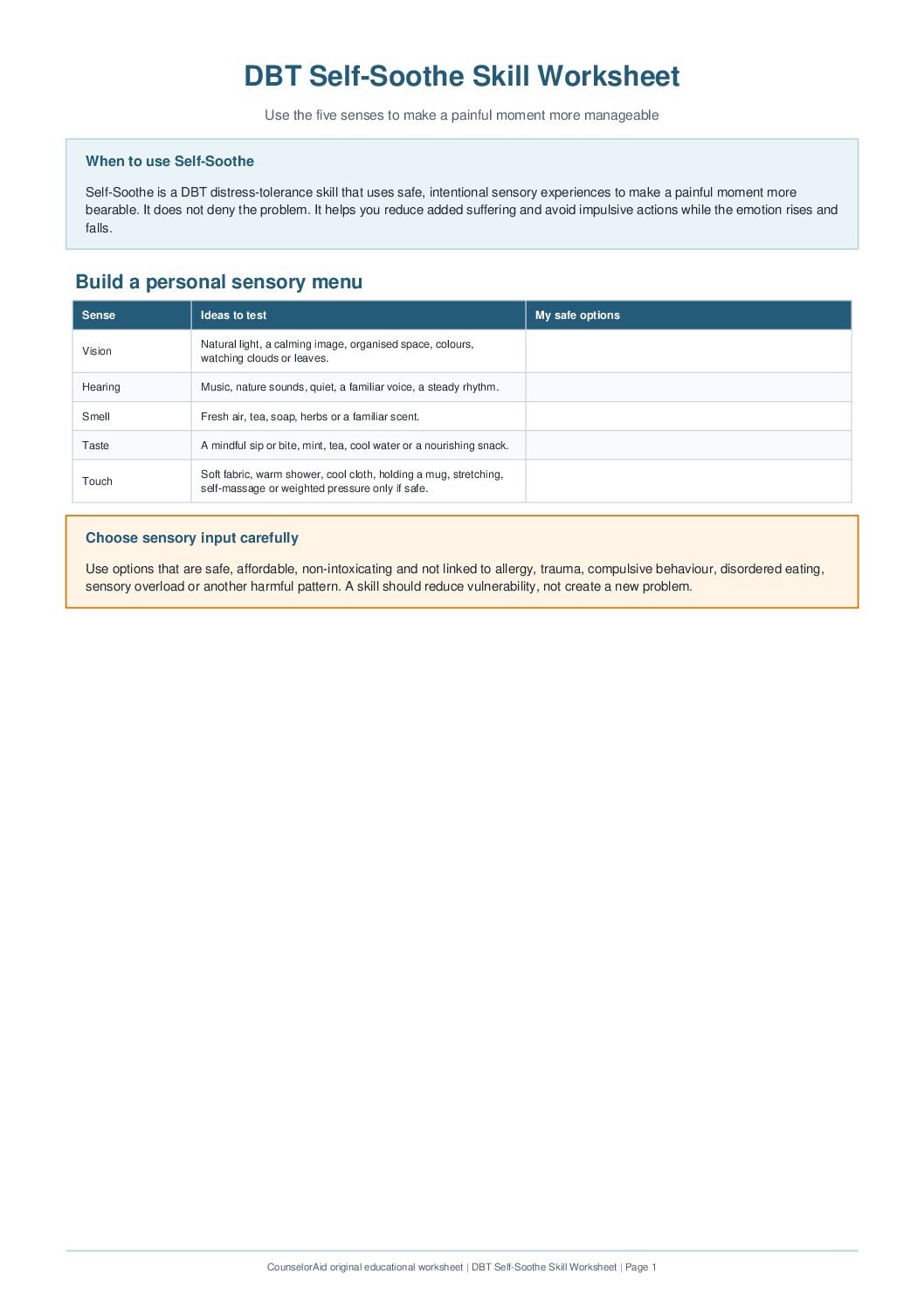
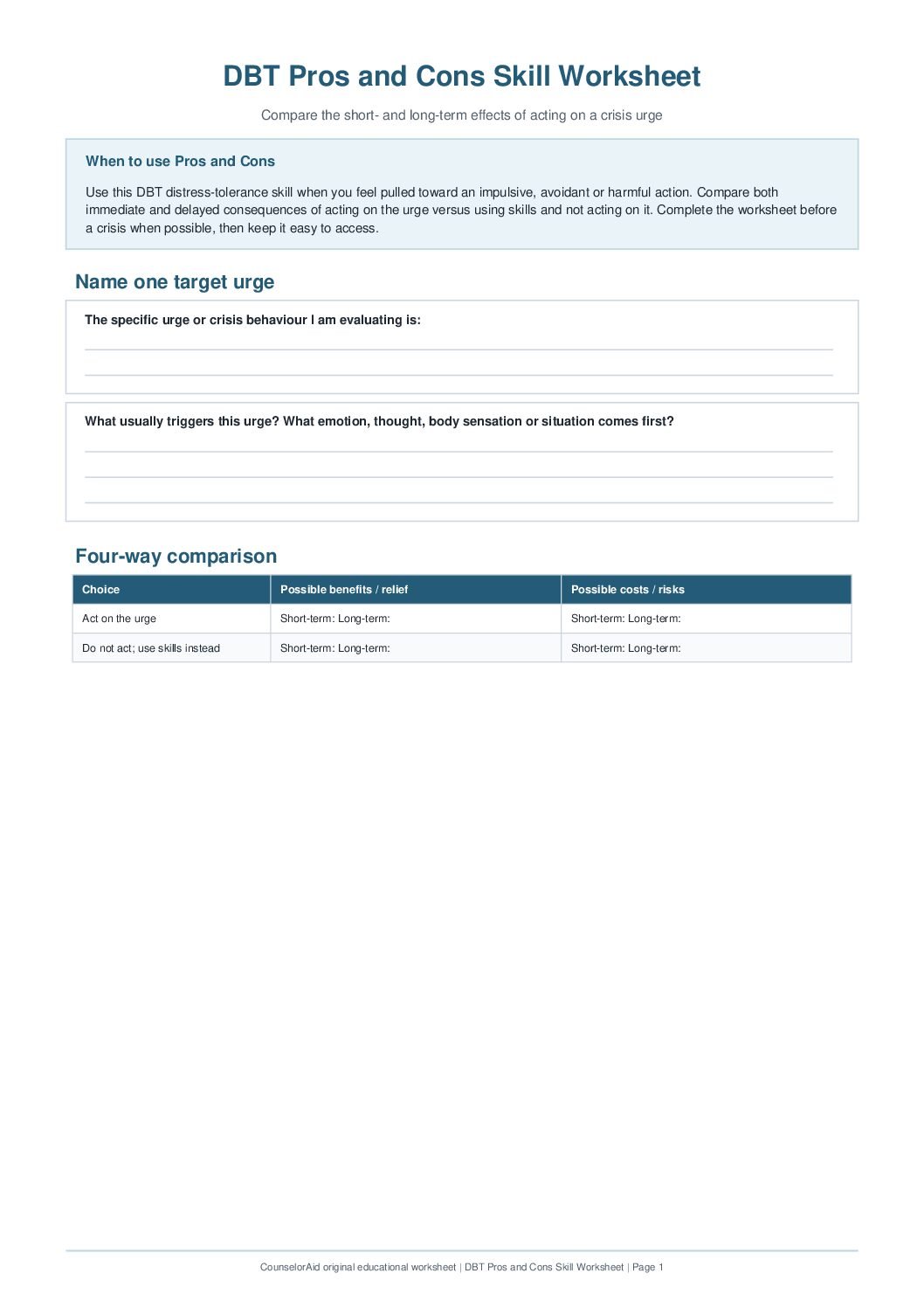
- Distress Tolerance
- Emotion Regulation
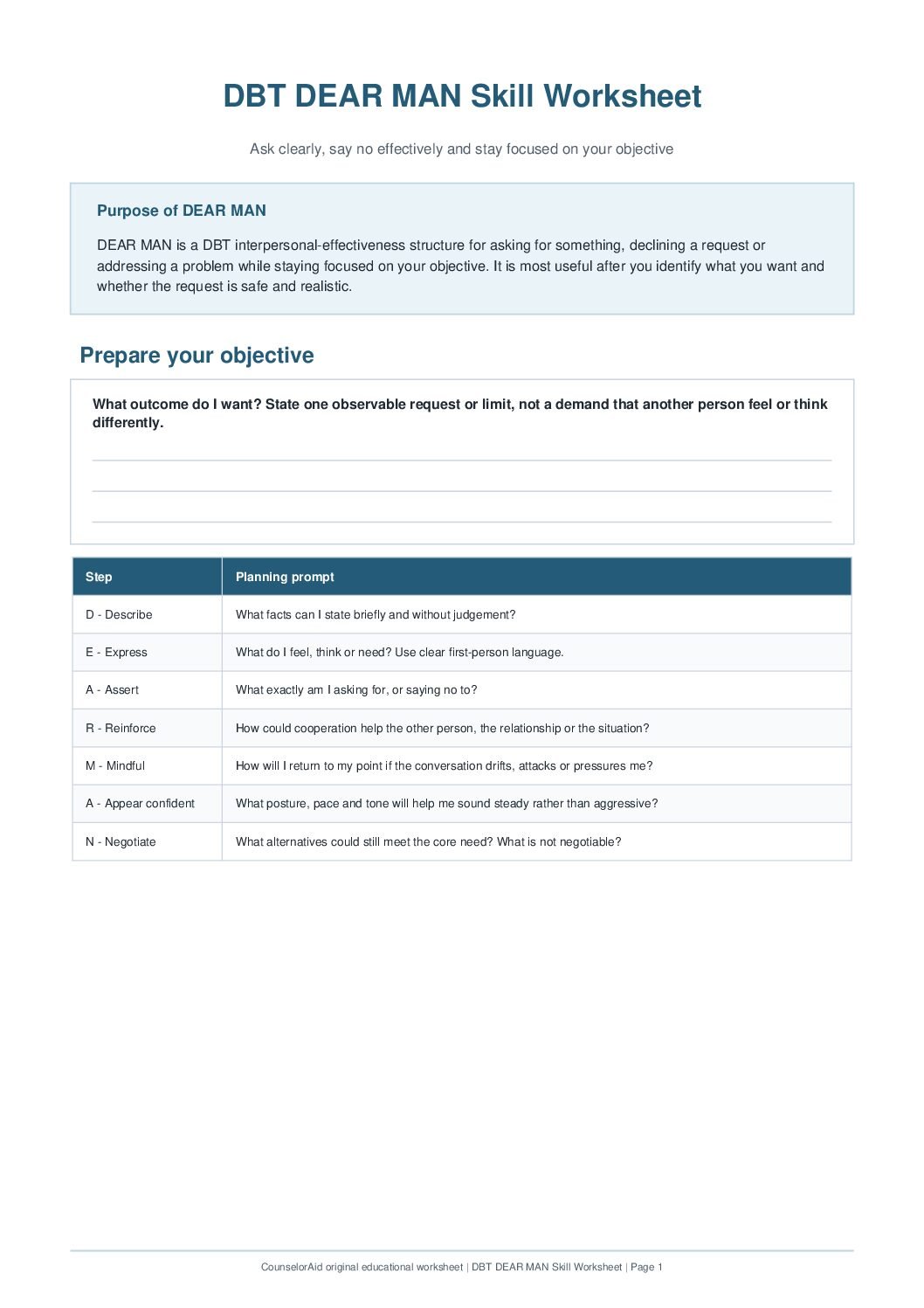
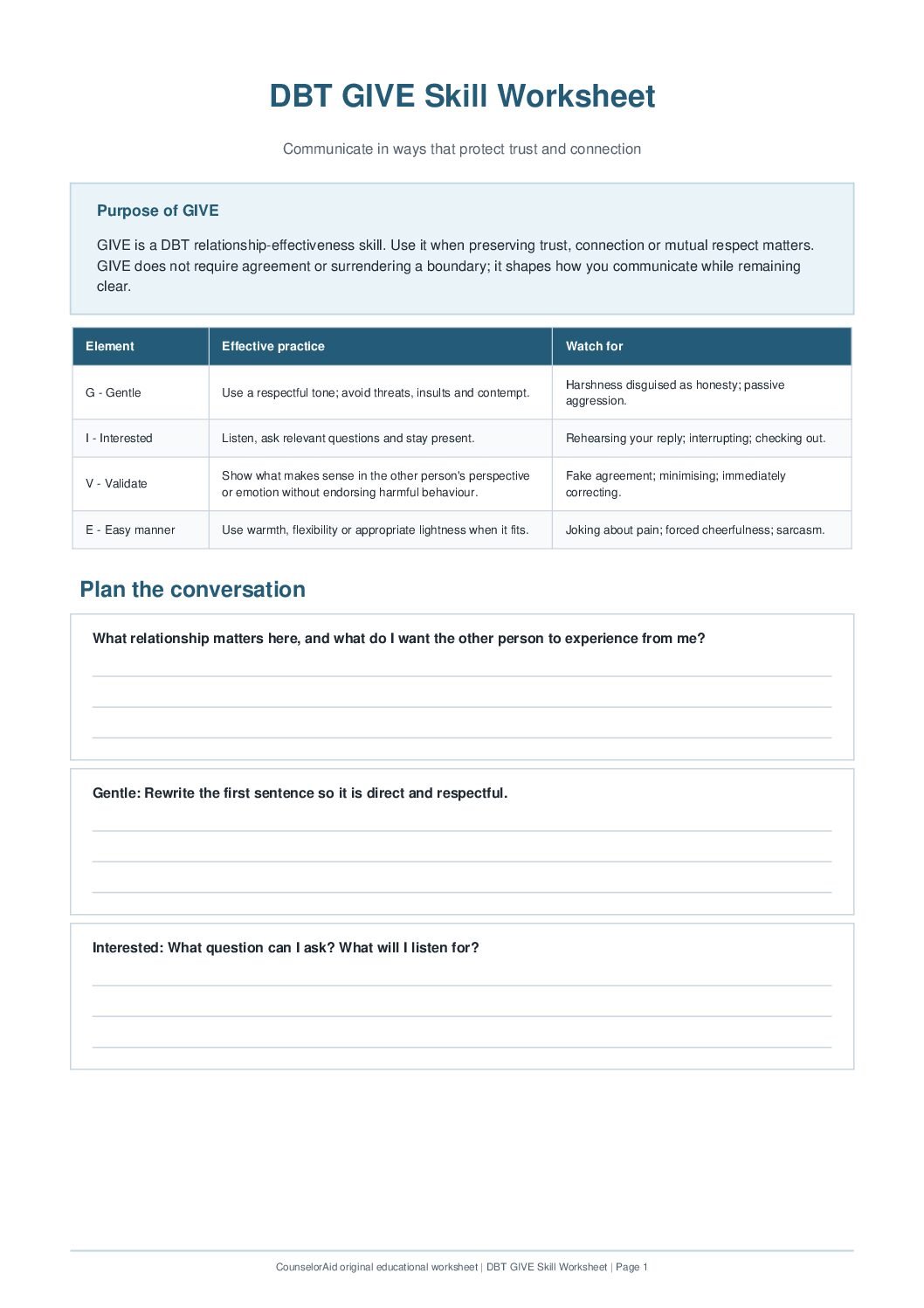
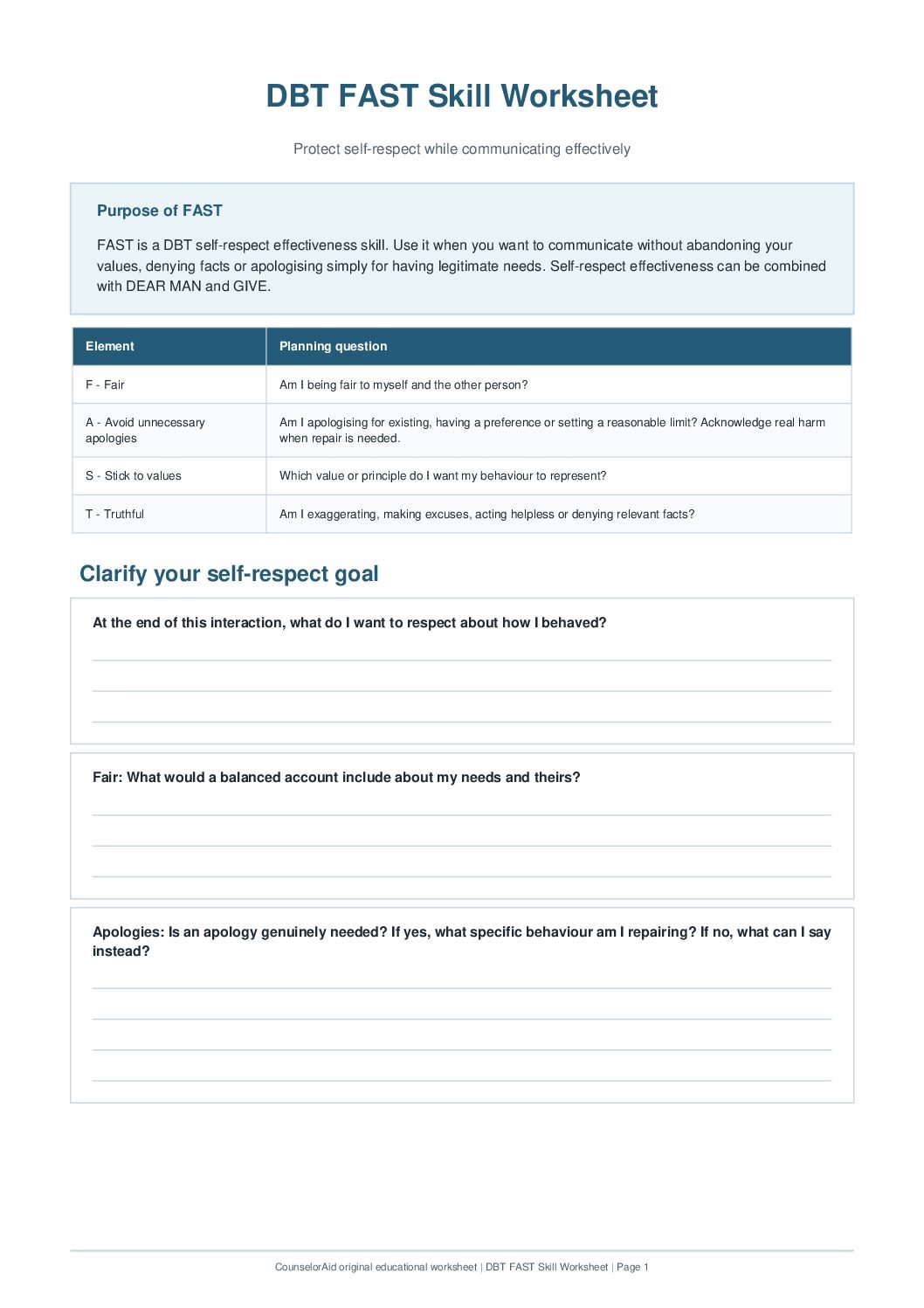
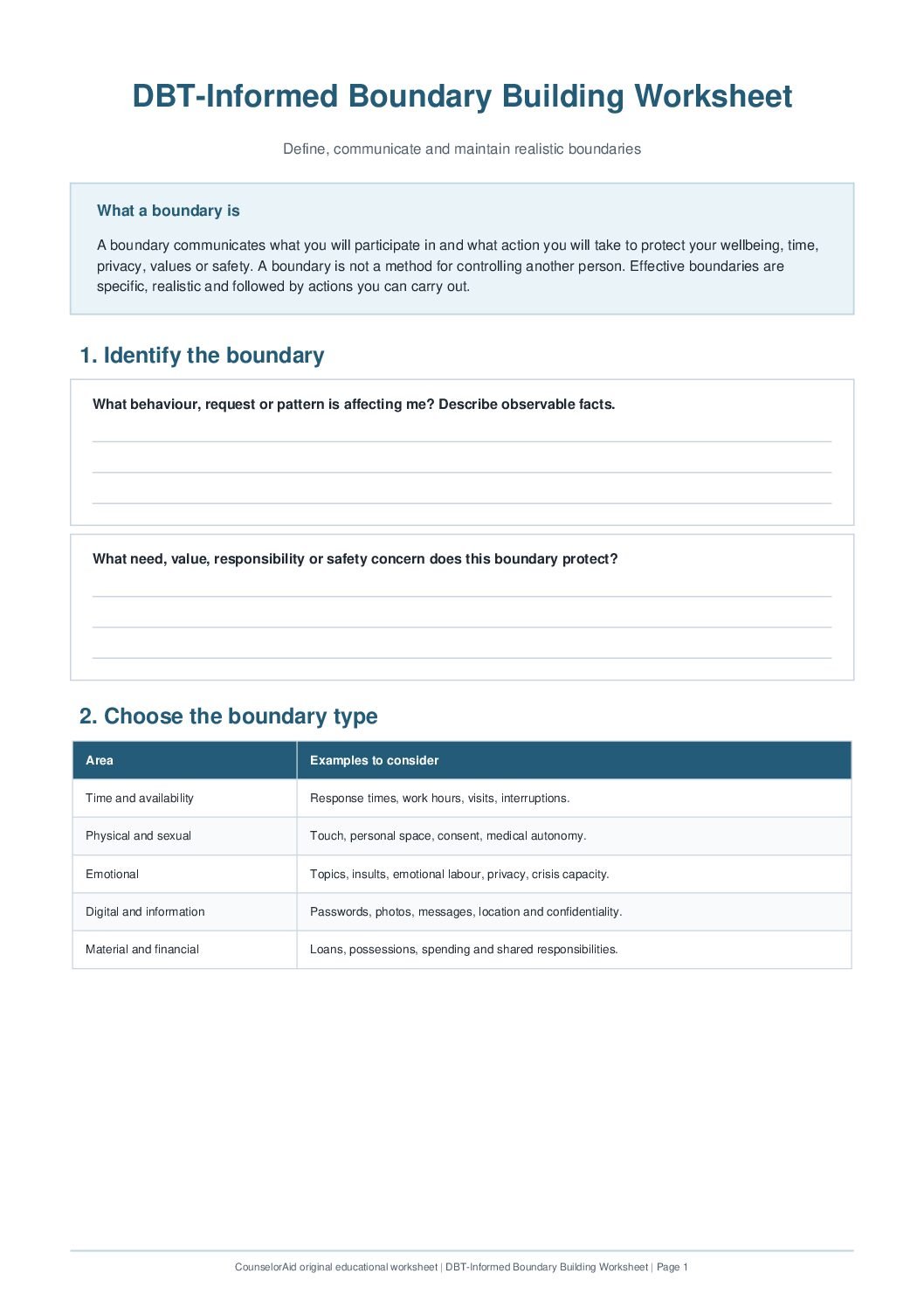
- Interpersonal Effectiveness
This library provides educational worksheets for practising specific DBT skills. The files are not diagnostic tools, have not all been independently validated, and are not equivalent to comprehensive DBT treatment.
Benefits of Using DBT Worksheets
DBT worksheets are commonly used to support skills teaching, between-session practice and discussion with a therapist or skills trainer. Their usefulness depends on the person, the skill, the context and the wider treatment or support available. A worksheet by itself is not evidence that a person is receiving DBT and should not be described as a treatment for a disorder.
- Convenience: Access your worksheets anytime, anywhere with easy-to-download PDF formats.
- Self-Paced Learning: Work through the exercises at your own speed.
- Skill Reinforcement: Practice DBT techniques between therapy sessions.
- Progress Tracking: Monitor your growth and improvement over time.
DBT worksheet library
Explore the worksheet library by DBT skills module. Open a section below and select any worksheet to view or download the printable PDF.
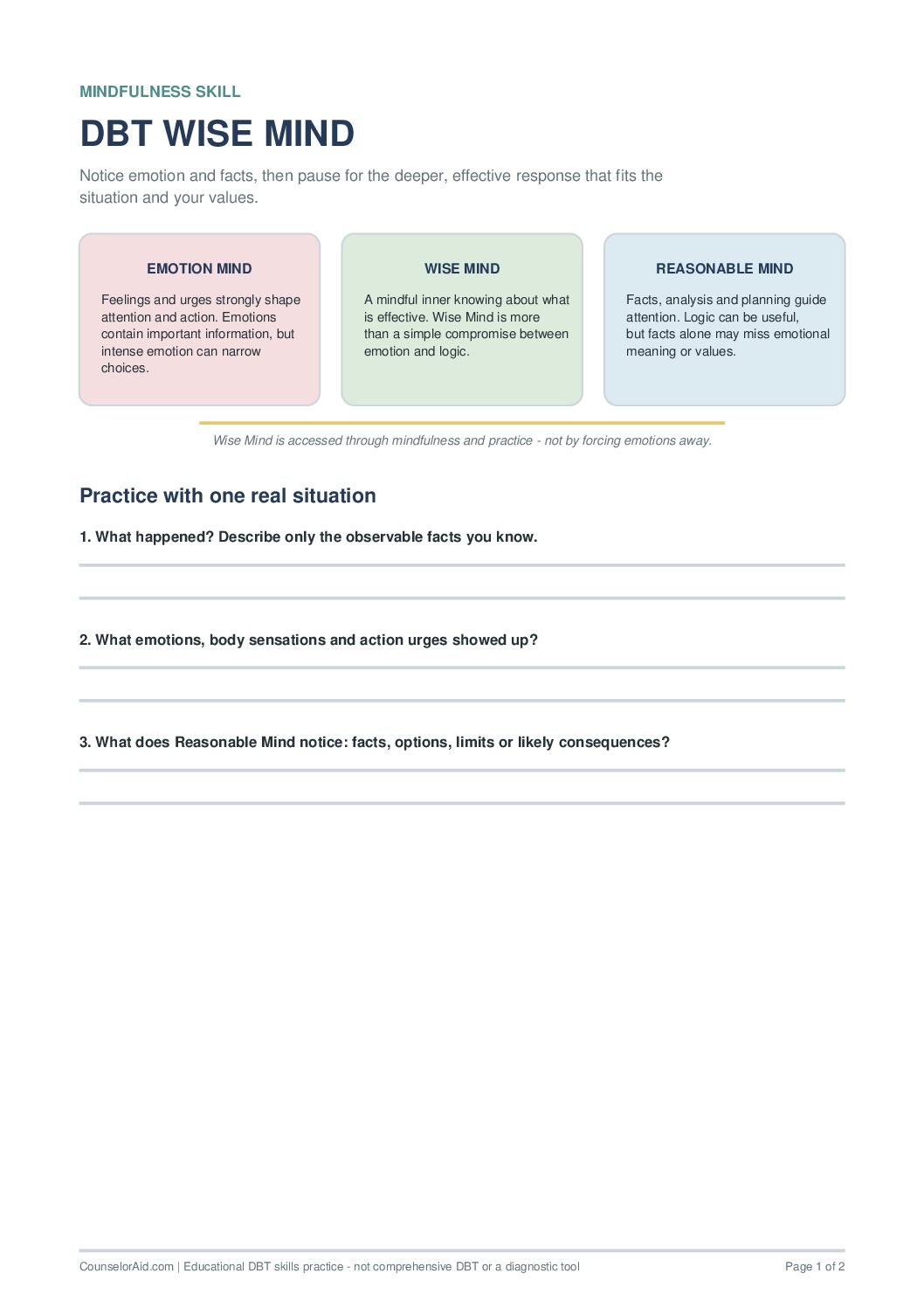
Mindfulness Skills Worksheets
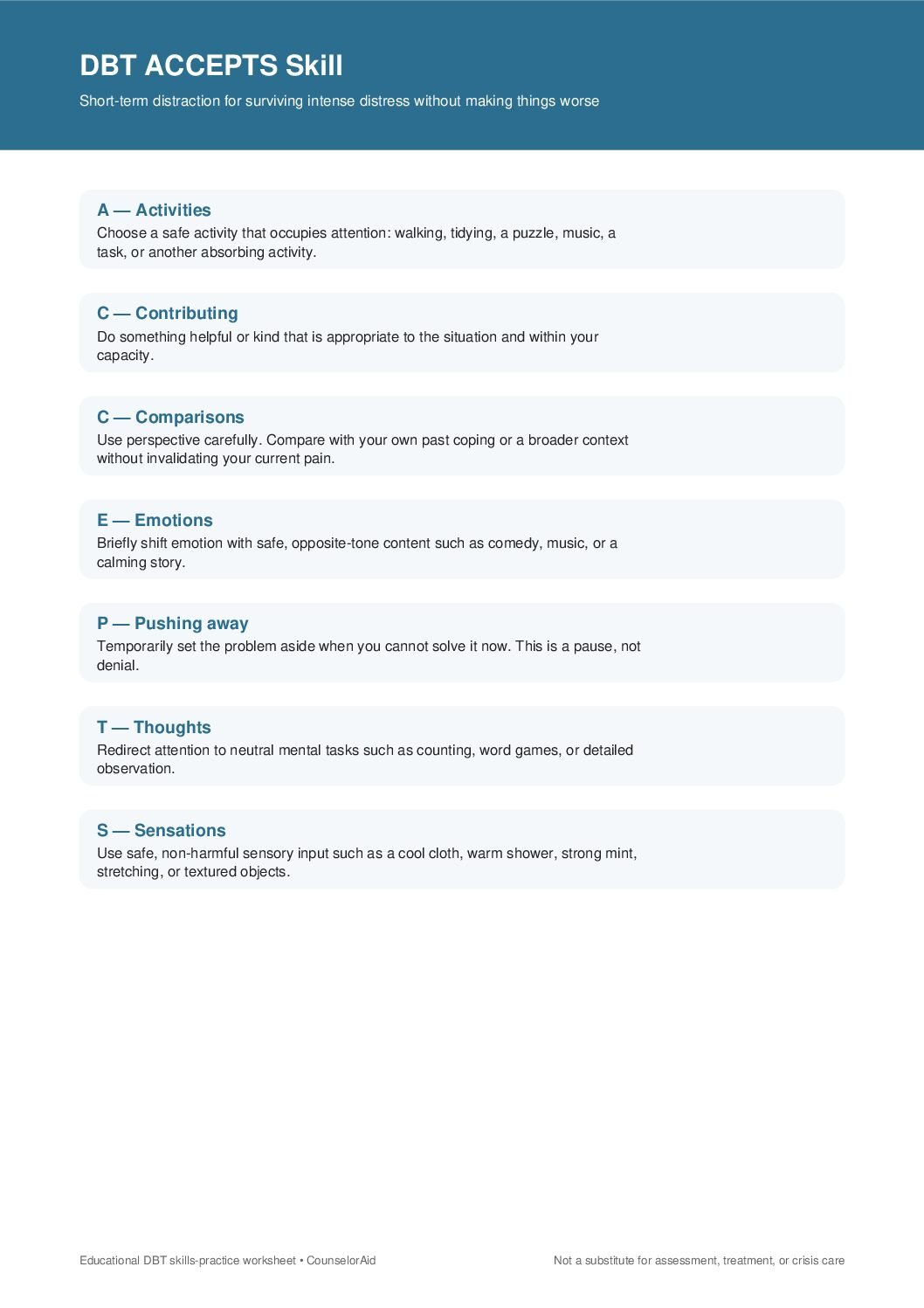
Distress Tolerance Worksheets
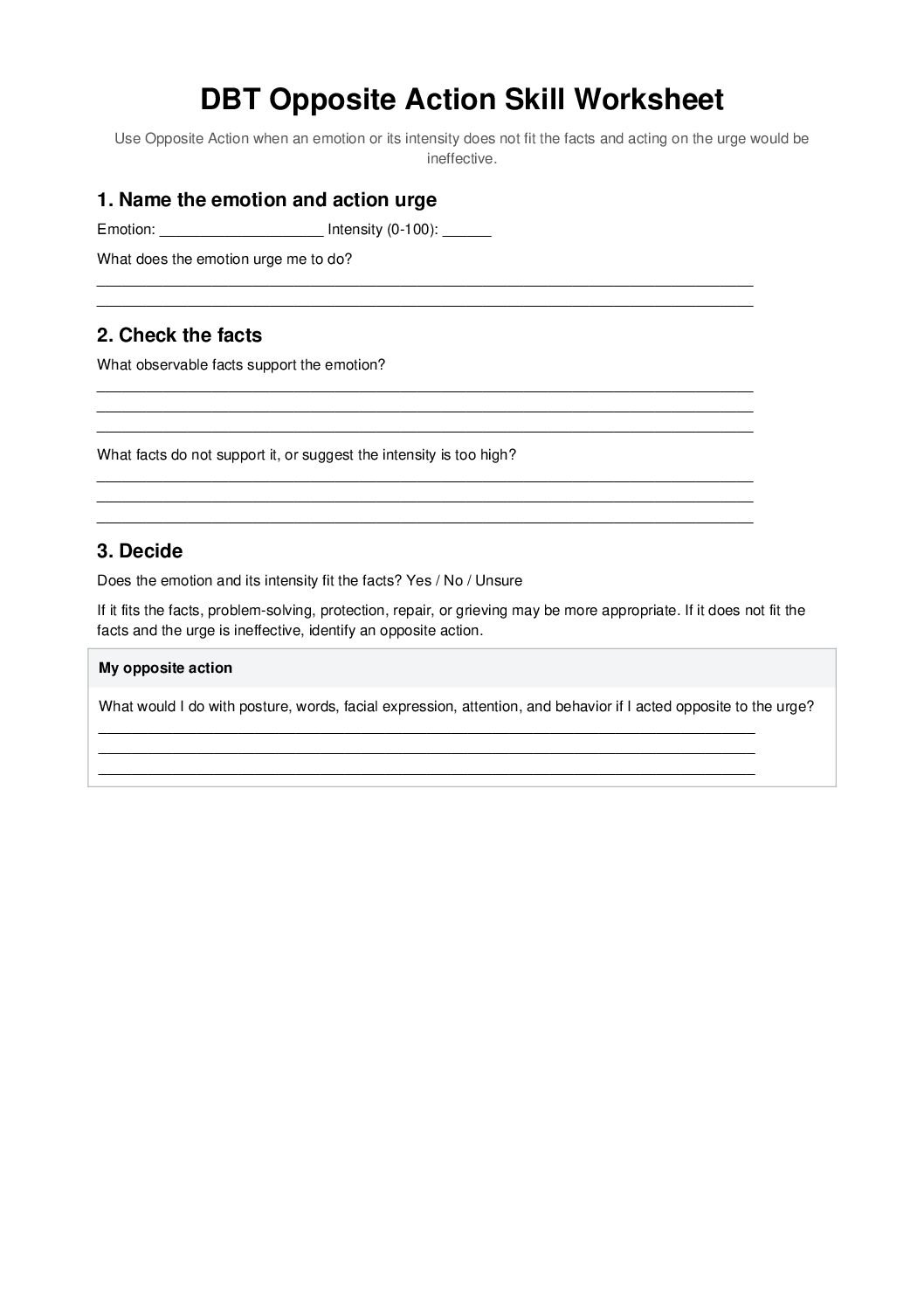
Emotion Regulation Worksheets
Interpersonal Effectiveness Worksheets
Step-by-step DBT worksheet guides
Use these HTML guides for instructions, examples, safety considerations and related CounselorAid resources before opening the printable PDF.
Frequently Asked Questions
What is Dialectical Behavior Therapy (DBT)?
Dialectical Behavior Therapy is a type of cognitive-behavioral therapy developed by psychologist Marsha M. Linehan. It combines standard cognitive-behavioral techniques for emotion regulation with concepts of mindfulness, distress tolerance, and acceptance largely derived from Buddhist meditative practice.
What conditions can DBT treat?
DBT was originally developed for people with chronic suicidal behaviour and borderline personality disorder. Comprehensive DBT has its strongest established evidence in that context. Adapted DBT programmes have been studied for other populations, but the evidence, format and recommendations differ; a general worksheet should not be presented as treatment for any diagnosis.
What are the four main skills taught in DBT?
The four core skills modules in DBT are:
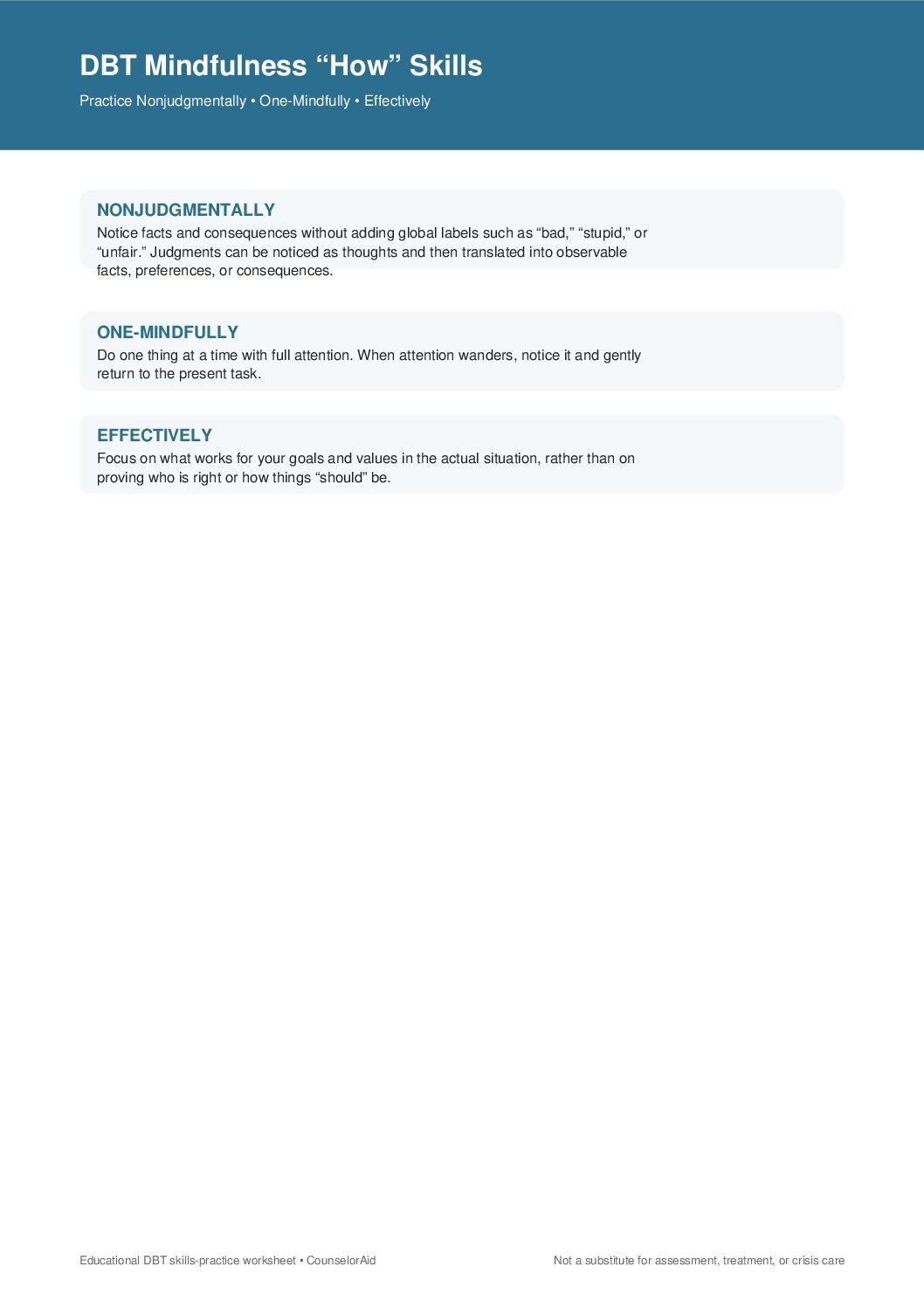
- Mindfulness: Being present in the moment
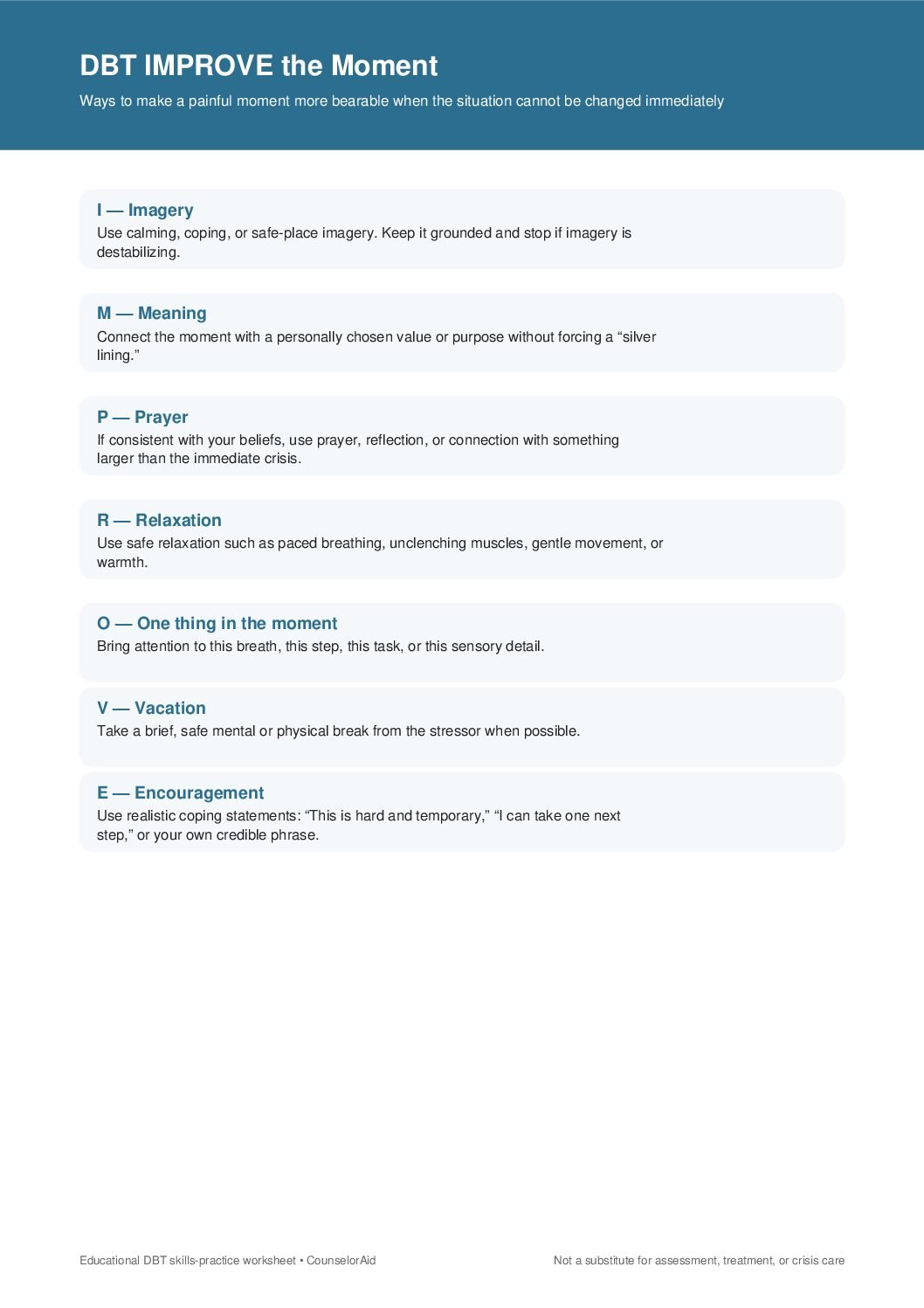
- Distress Tolerance: Coping with crisis situations
- Emotion Regulation: Managing and changing intense emotions
- Interpersonal Effectiveness: Communicating with others in a way that is assertive, maintains self-respect, and strengthens relationships
How is DBT different from other forms of therapy?
DBT differs from other therapies in several ways:
- It emphasizes balancing acceptance and change
- It includes both individual therapy and group skills training
- Comprehensive programmes may include between-session coaching to help clients apply skills; this is not an emergency service
- It has a strong focus on behavioral skills training
Is DBT only for people with Borderline Personality Disorder?
No. DBT was originally developed for people with chronic suicidal behaviour and borderline personality disorder. Adapted programmes have been studied for other populations, but their content and evidence differ. A clinician should not assume that standard DBT or a worksheet is indicated solely because someone has difficulty regulating emotions.
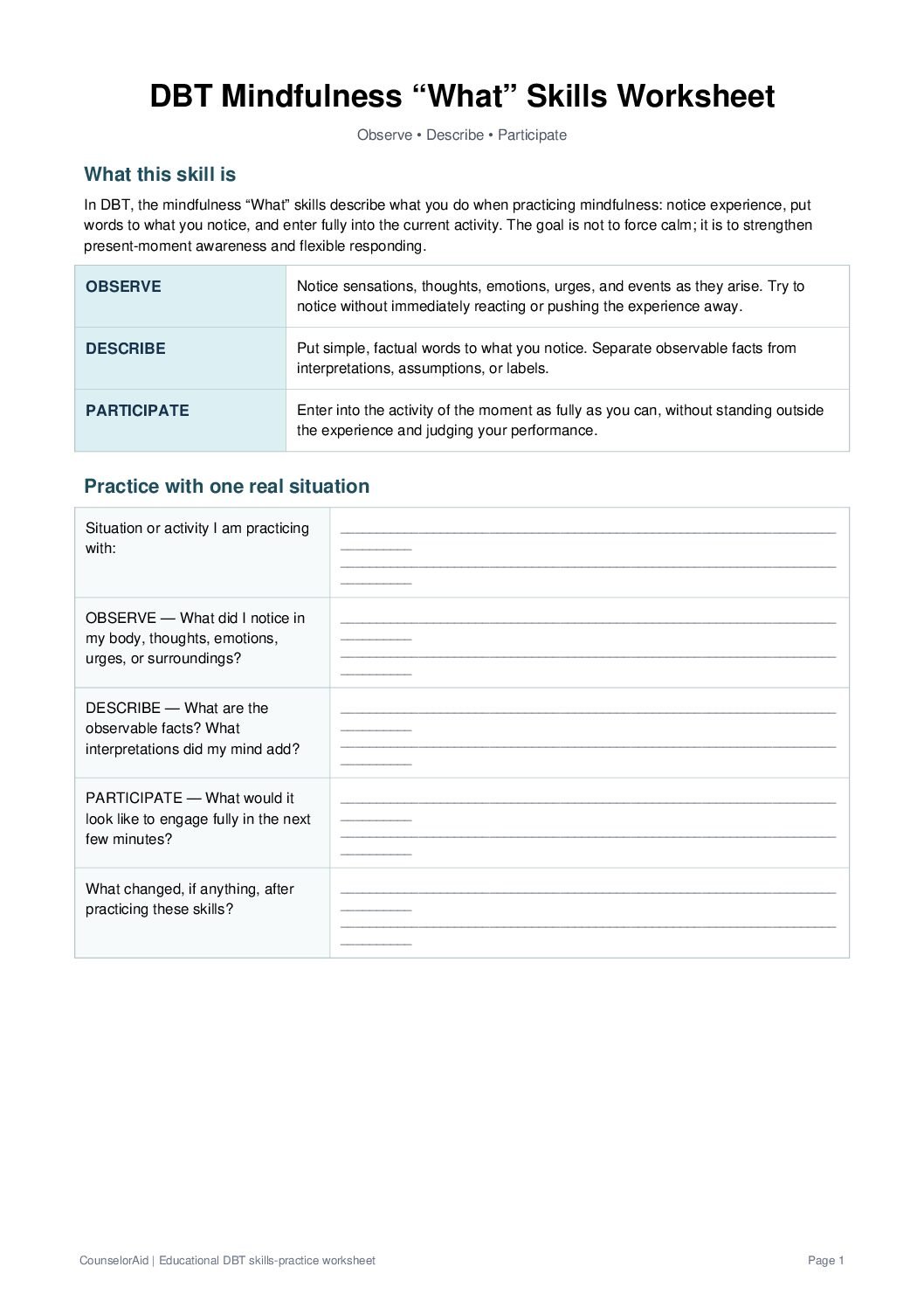
What are DBT worksheets and how are they used?
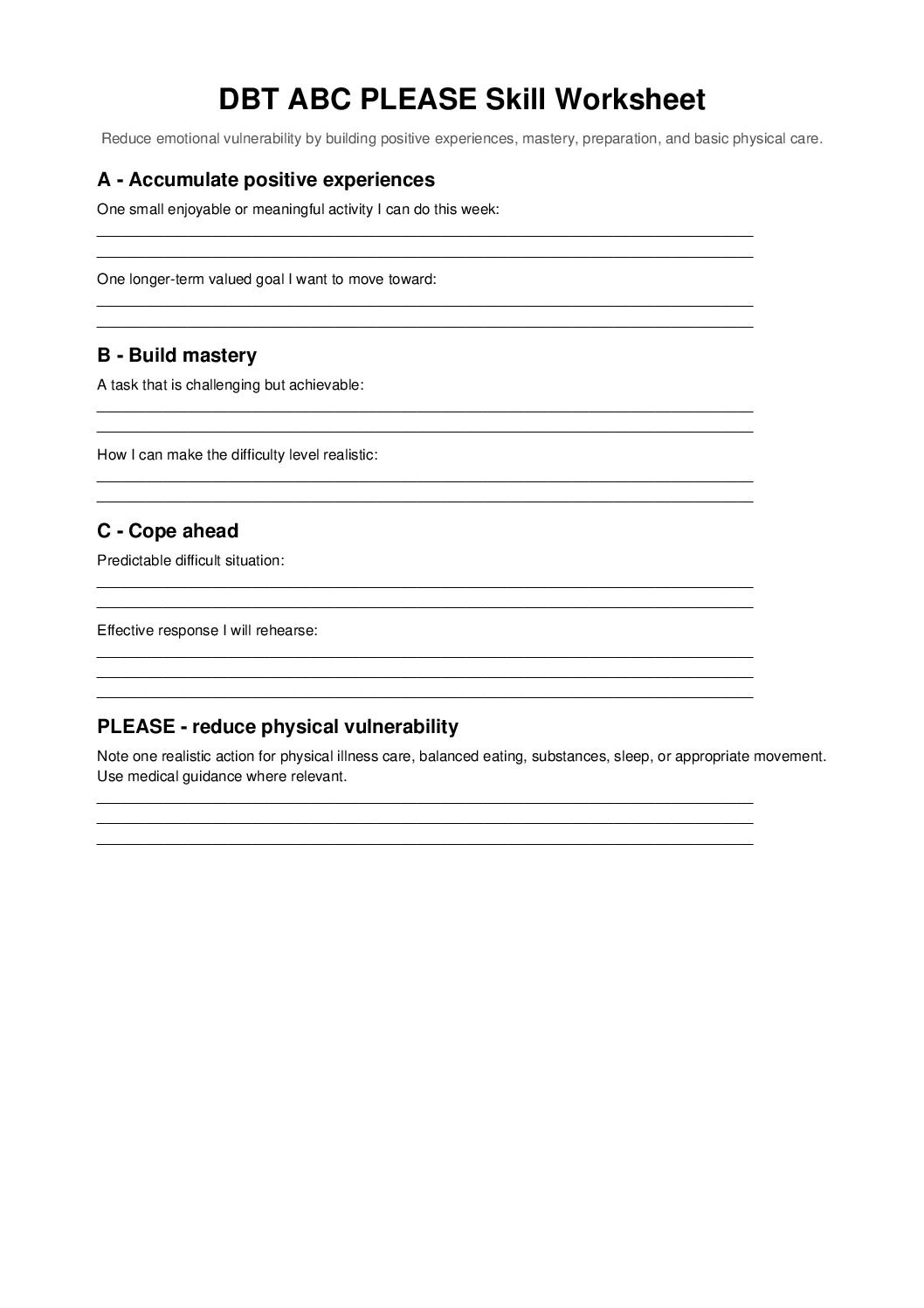
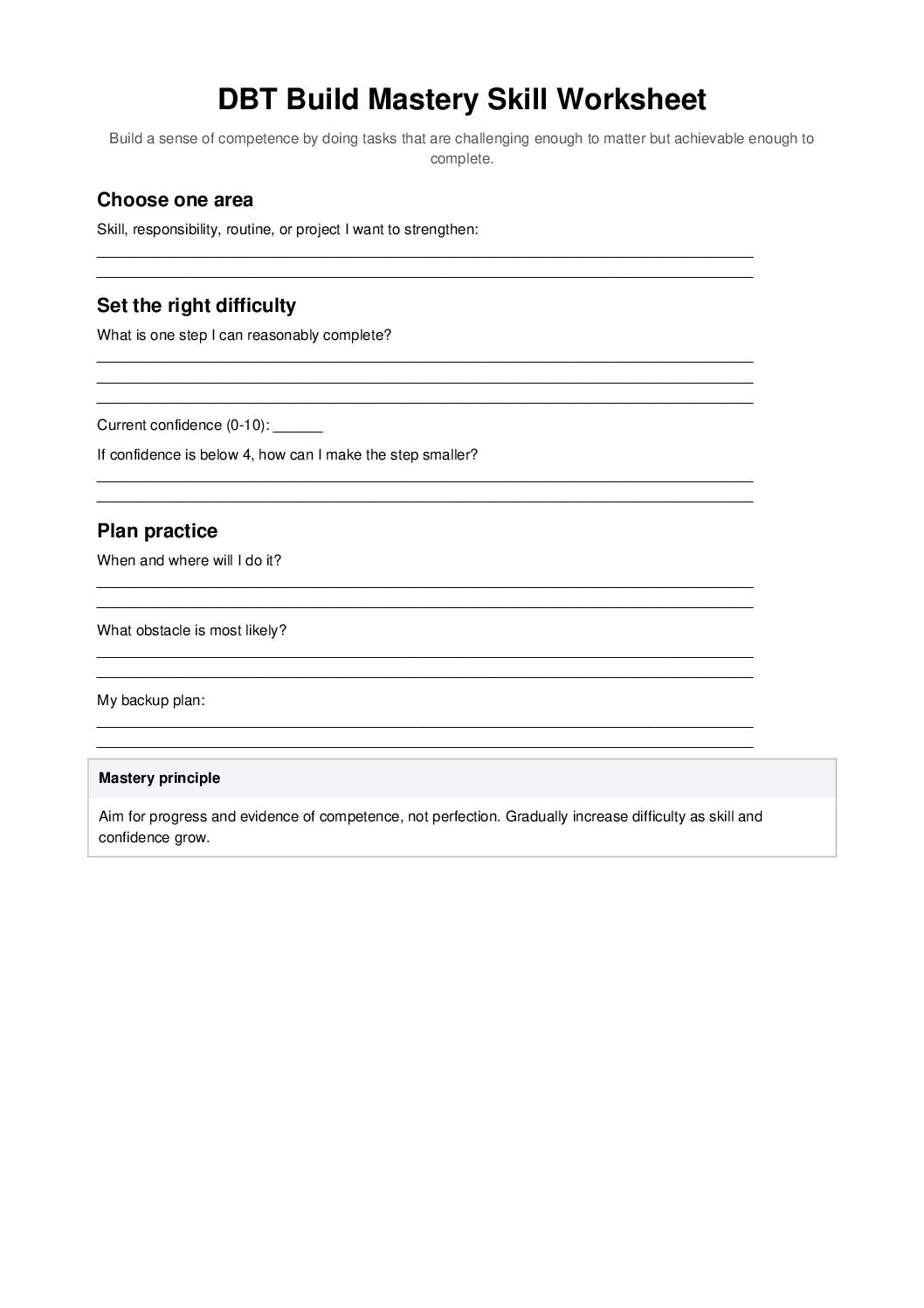
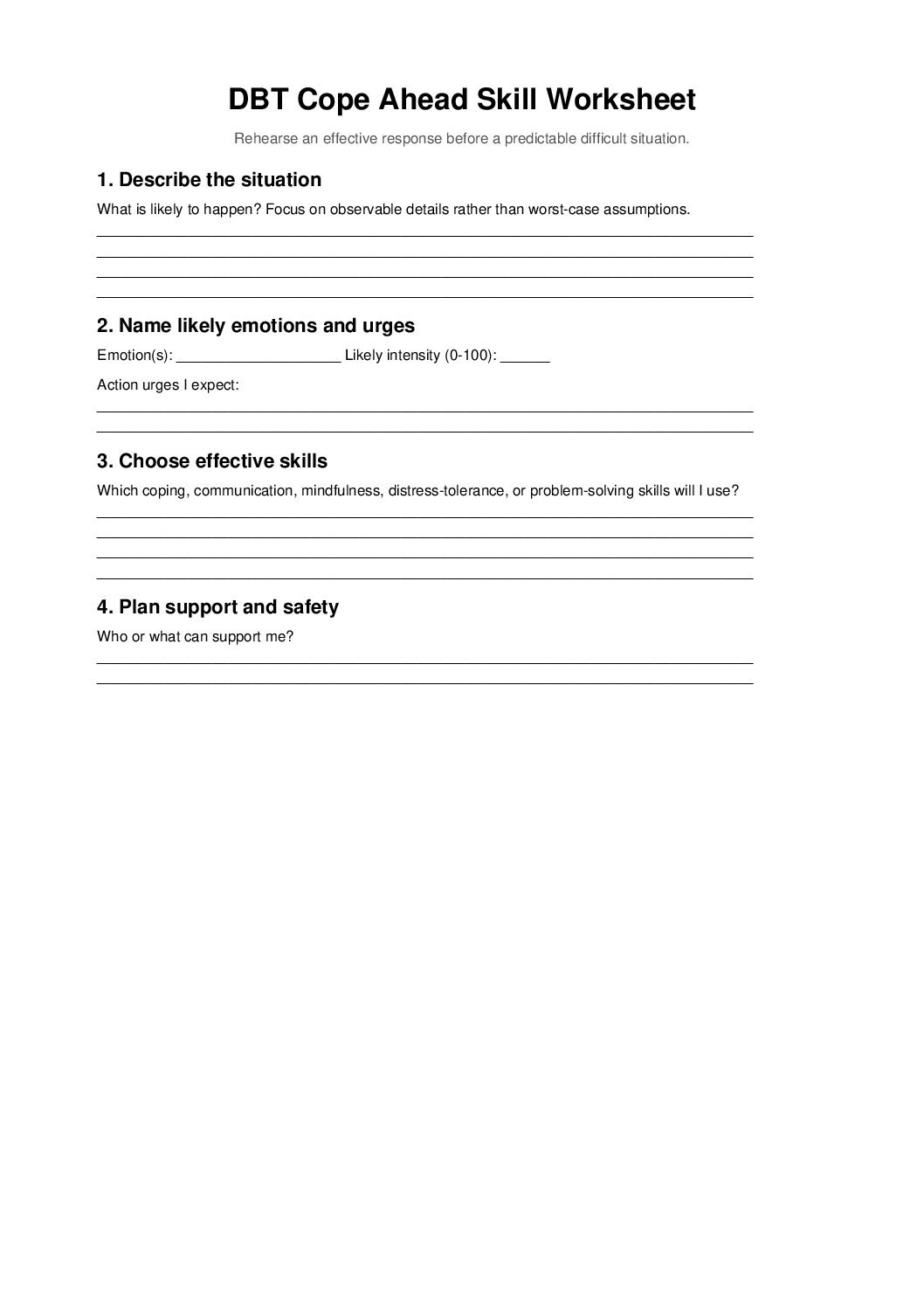
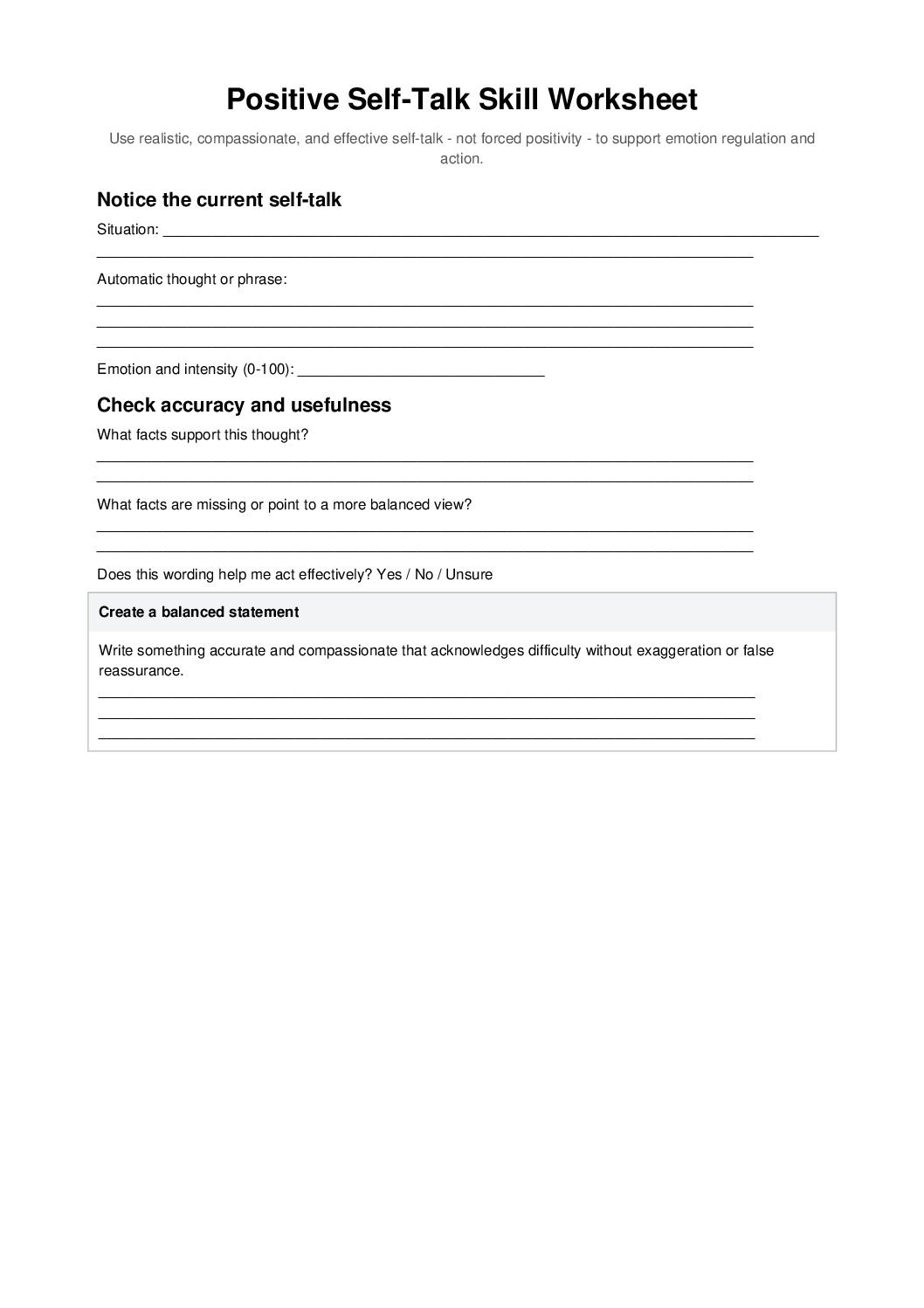
DBT worksheets are tools used to practice and reinforce skills learned in therapy. They typically include exercises related to the four core skill areas. These worksheets are often assigned as homework to help clients apply DBT skills to real-life situations.
Can I do DBT on my own using worksheets?
While DBT worksheets can be helpful tools for learning and practicing skills, DBT is most effective when conducted under the guidance of a trained therapist. The worksheets are designed to complement a comprehensive DBT program, not replace professional treatment.
Are there any risks or side effects associated with DBT?
DBT can involve emotional discomfort, behavioural change and discussion of high-risk experiences. Suitability, risks and adaptations depend on the person and setting. Worksheets can also evoke strong reactions. Treatment should include appropriate assessment, consent, monitoring and crisis planning where relevant.
How can I find a qualified DBT therapist?
To find a qualified DBT therapist, you can:
- Ask your primary care doctor for a referral
- Contact local mental health clinics or hospitals
- Check with professional psychological or psychiatric associations
- Use online therapist directories that allow you to filter for DBT specialists
Remember to verify the therapist’s credentials and experience with DBT before starting treatment.
Evidence and references
- Linehan, M. M. DBT Skills Training Manual, Revised Edition. Guilford Press, 2025.
- Behavioral Tech: DBT Skills Training Fundamentals.
- NICE CG78: Borderline personality disorder.
- NICE NG225: Self-harm.
Evidence and editorial note
Resource type: Educational overview of a DBT skill or skills module. It supports learning and practice but is not comprehensive Dialectical Behavior Therapy.
Evidence basis: Marsha M. Linehan’s DBT Skills Training Manual, Revised Edition (2025), official Behavioral Tech training information, current NICE guidance and peer-reviewed evidence reviews where treatment claims are discussed.
Review status: Written and evidence-checked by the CounselorAid editorial team. Last evidence review: 3 August 2026. No named independent clinical reviewer is being claimed. Please report factual or safety concerns through the contact page.
Important: This information cannot diagnose a condition, assess personal risk or replace care from an appropriately qualified professional. In an immediate crisis or medical emergency, use local emergency or crisis services.